GET YOUR FREE POLYVAGAL-INFORMED JOURNAL PROMPTS HERE

If it hadn’t been for the immediate pain relief from the endometriosis, I’d have run a gazillion miles in the opposite direction from yoga, breathwork and meditation. Back in 2001, I didn’t understand about the impact my trauma history had on my capacity to feel safe around other humans, let alone my differently wired brain and extra sensitive nervous system.
I’d adore elements (was getting up for 6.30am classes in London at one point) but be full of angst – which I blamed myself for – around many other seemingly inevitable parts of every class (e.g. other people’s feet waaaay too close to my face when I struggled with even my own feet being so close).
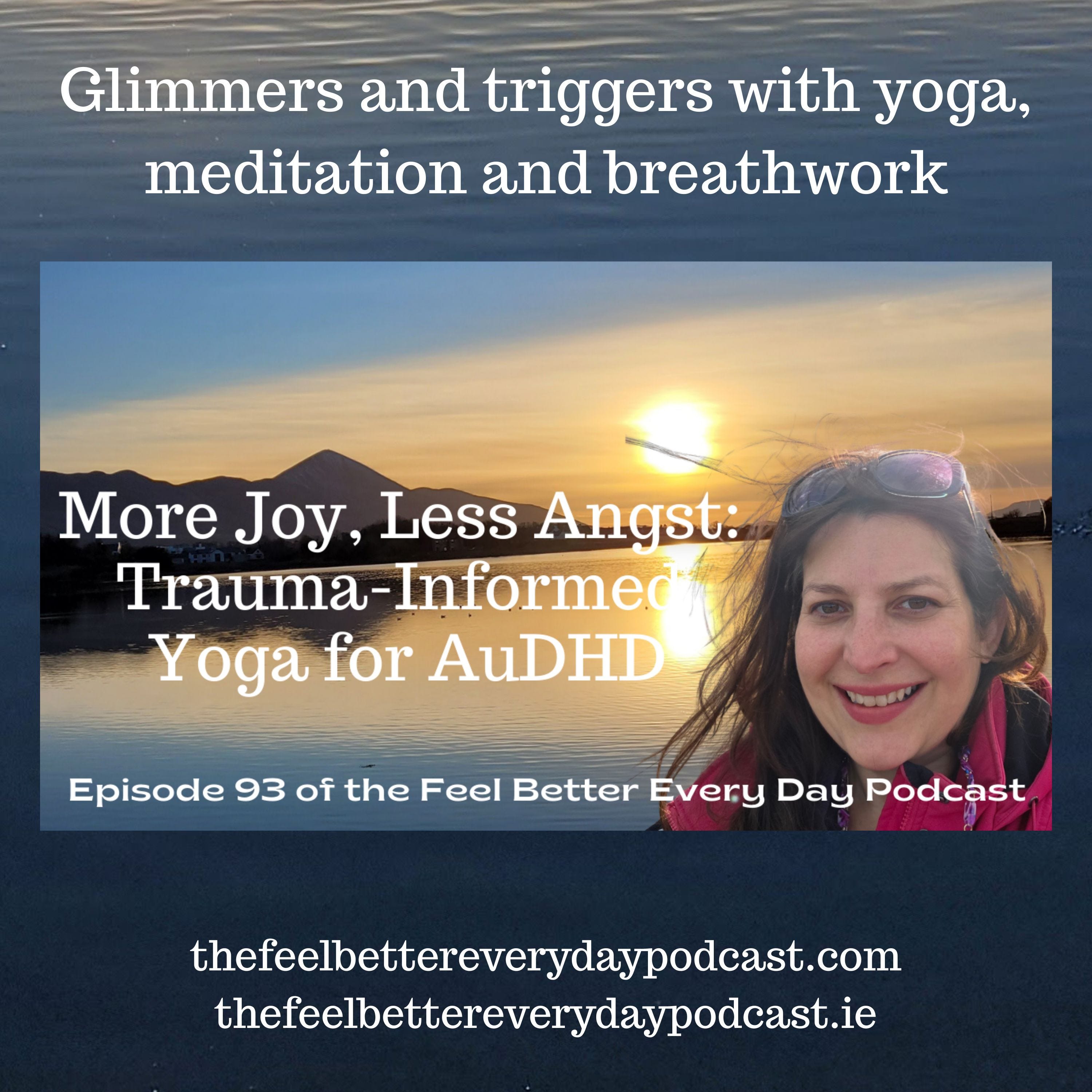
In this episode, I share some of my yoga glimmers as well as triggers and ideas – using the Feel. Love. Heal. framework – to help you give yourself the chance to experience calm and ease as you build strength, resilience, flexibility, focus, stamina, balance and reconnect with the peace and joy that are your birthright.
JOURNAL PROMPTS
As you watch or listen to this episode, ask yourself:
What do I hate about yoga, meditation and breathwork?
Might there be ways around it?
To get the benefits without wanting to run a gazillion miles in the opposite direction?
What do I LOVE about them? In the moment? For minutes, hours and even days afterwards?
What will you do differently (with your self-talk and communicating your needs and wants to others) as a result of watching or listening to this episode?
Let me know in the comments or by email – eve@selfcarecoaching.net
And if you’re feeling sad reading this because you can’t think of anything that supportive, let it be a cue to encourage you to be open to more of it in 2026 and beyond.
LINKS
Moving into 2026 with Roxy Romaniuk:
Community as Self Care (with Elizabeth Potts):
Book bonus videos: https://selfcarecoaching.net/book/
Míle Buíochas Mondays: https://feelbettereveryday.kit.com/f7f730d651
Trauma-informed and neuro-affirming yoga, breathwork and meditation: https://selfcarecoaching.net/services/yoga-and-meditation/
Endometriosis:
https://selfcarecoaching.net/?s=endometriosis
CHAPTERS
0:00–4:12 Introduction and recognising the benefits of yoga, breathwork, and meditation
4:12–8:43 Trauma-informed and neuro-affirming approaches and adapting practice to your needs
8:43–11:34 Sensory considerations, self-advocacy and embracing self-love
11:34–15:34 Community, co-regulation and giving yourself permission to experiment
15:34–20:16 Resources, support and moving further into 2026
FULL TRANSCRIPT
Do you like the idea of yoga, breathwork, meditation, but think that with your trauma history, hypervigilance, AuDHD (that’s autism and ADHD) brain, you simply can’t?
This episode will share some of the things that I use with clients and students, as well as the things that have helped yoga, breathwork and meditation really become a way which I come home to myself, rather than a way in which it often felt quite torturous.
Welcome to Episode 93 of the Feel Better Every Day Podcast. I’m your host and producer, Eve Menezes Cunningham. I’m an author, columnist, trauma therapist, self-care coach, and senior accredited supervisor specialising in AuDHD, ADHD-friendly, trauma-informed and neuro-affirming and transpersonal and somatic approaches.
I help people through self-care practices that honour how your brain and nervous system work, as well as your Self with that uppercase S, that highest, wisest, truest, wildest, most joyful, brilliant, miraculous part of yourself. With new episodes each Tuesday, you can subscribe or follow to make it less likely that you’ll miss new episodes.
And if you’re new here, do check out older episodes, access free deeper dives and more resources and information at thefeelbettereverydaypodcast.com
Thank you for listening. I hope you enjoy this episode.
I am recording this after I recorded the rest of the episode because I realised that I had focused so much on the challenges when you have a trauma history, when you have that hypervigilance, if you have autism or ADHD, AuDHD, and I missed the GLIMMERS and what keeps me going back.
And especially with Roxy’s episode last week (Episode 92). This morning, we’d been snowed in yesterday and I had to cancel attending a class. And this morning I was expecting ice. So I hadn’t had my hopes too high up, which meant I hadn’t psyched myself up as much as I normally do for an early start.
I was like, when it wasn’t all icy, it was like, “Oh, so I can go, but I’m so cold and I’m so cosy and I don’t want to get up and I maybe I don’t like yoga and maybe I’ll just go back to sleep and maybe…”
And I had a word with myself gently and I went. And I again, when I say I almost weep sometimes in class, like no one would see, but it just feels like my whole body is saying THANK YOU, THANK YOU, THANK YOU.
And I think that’s the other side of sensory issues that we often don’t talk about.
We talk about the distress. We talk about when it’s triggering. We talk about when people feel too close to intrusive. Where there are like smells or any kind of senses being overly stimulated. But of course, we need stimulation and we benefit from stimulation and the movement, the joy of feeling the joints and the muscles and the blood and just the heart lightening and the mind calming and the soul connecting.
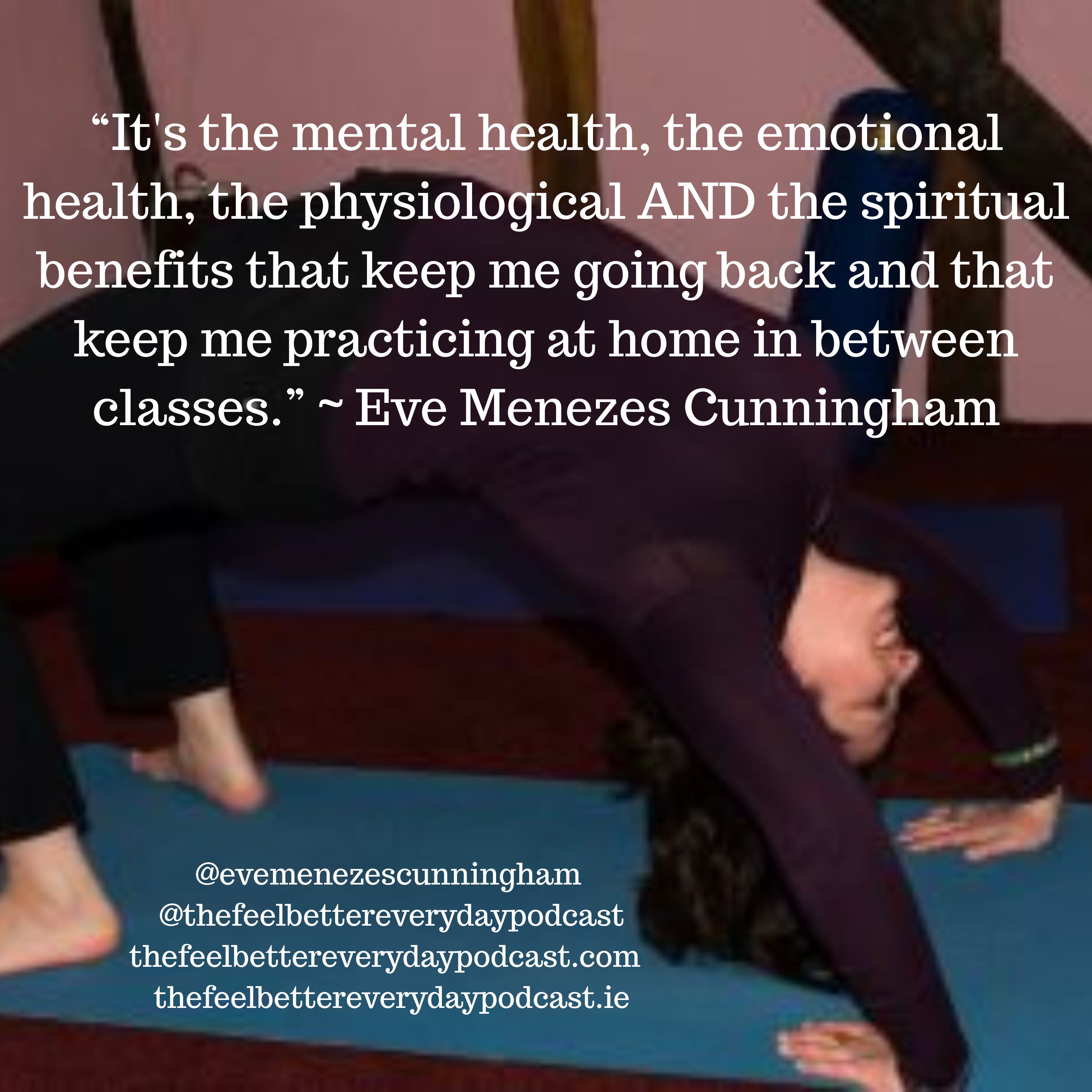
I really wanted to add this little bit to today’s episode because it’s the mental health, the emotional health, the physiological and the spiritual benefits that keep me going back and that keep me practising at home in between classes.
But I’m really finding that attending classes is so, so worth it if you can manage it.
So Happy New Year! It’s really important that if meditation, breathwork and yoga appeal to you, that you know that there are trauma-informed ways of working, there are neuro-affirming ways of working.
It can be an accessibility issue. And I know I’ve said before in other episodes, I only stuck with it because it was such good pain relief with the chronic pain condition I had for so many decades. I really want to save other people the pain.
We’ll be talking more about rejection sensitivity dysphoria in a couple of weeks. But throughout my training, throughout almost every class I attended, I’d always have such a huge inner voice telling me I was doing it wrong.
Often, instructors would be really kind of didactic in terms of not fidgeting and taking your socks off when I had sensory issues around any of that. I’m hoping that listening to today’s episode or watching will help you give yourself permission to do what’s appropriate for you. Maybe talk to instructors in advance.
Whether you’re doing a home practice or going to a class, knowing that yoga, breathwork and meditation is for everybody and every mind. It can be transformative when you own your sensory issues and you own other aspects, your hypervigilance, other things that have stopped you getting onto the mat, feeling like you’re too much and you can’t do it.
You absolutely can. But as with so much around self-compassion, first of all, we’re going to work through the Feel. Love. Heal. framework again, but recognising that it’s not about overriding sensory issues or other ADHD or autism traits.
It’s about recognising them purely as information. It’s another opportunity to be mindful, to work with yourself rather than arguing with reality and wishing that you move through life differently. It’s about body work that we do for ourselves. It can be so beneficial in so many different ways.
I’ve spoken about yoga nidra and the research showing that it increases dopamine by up to 65% (for this and more visit selfcarecoaching.net/yoga). No side effects. It’s just a gorgeous deep rest, non-sleep. You can do it in as little as 10 minutes. You can take longer practices and choose voices that appeal and choose whether you want music or not music in the background. There are so many options.
And similarly, there are so many different types of yoga classes. There are so many that you can do online videos, you can attend a local studio, you can try different studios, different classes within the same studio. With breathwork, there’s going to be somewhere it’s much more tailored to the individual, others where they’re trying, like, or you feel that they’re trying to make you conform to another way of breathing.
There’s so much we criticise about ourselves on a day-to-day basis. We really want any kind of self-care practices to be nourishing and supportive and affirming. And so, as we move into the Feel part of the Feel. Love. Heal. framework, I want you to think about some of the obstacles.
When you think about yoga, breathwork, meditation, make a list. All the things that get in the way of you going or enjoying those practices, if it appeals. If this does not appeal, I don’t imagine you’re listening this far into the episode.
Is it something that could be solved by wearing socks, by talking to an instructor, by getting special socks with a grip? Maybe explaining that you’re going to kind of move in your own way. Some instructors are great about encouraging that at the start of every class. Some instructors will ask if you’ve got any injuries or illnesses they need to know about.
Others won’t. But you can own your brain. You can befriend your brain.
You can befriend your body and just speak up for yourself and say in advance, either ringing the studio or emailing or just speaking quietly to the instructor before the class and just say you’re taking care of yourself. It might look a bit strange. You can get there early and find a space where you’re less likely to feel disturbed.
You can recognise that even if you’re looking very serene, you may be feeling very hypervigilant and you can talk soothingly to yourself. There are a million things you can do and I’d love to hear what you’re already doing. Let me know, email eve at selfcarecoaching.net or message in the comments and ask me any questions.
I still remember an instructor I had in London. He was brilliant, but he had no idea about women’s bodies and hair. It’s all right for a guy with a crew cut to say don’t touch your hair, but when you have longer hair and it’s at different lengths and you’re moving into different poses and you’re having to adjust clothing to fit over curves, you can’t not.
You can’t be exposing bits that aren’t appropriate to be exposing. You can’t be having enormous sensory issues about hair on the back of your neck. I mean, you can and I used to in my 20s.
I would override what felt friendly for me and my body and my brain and obey the strange man who was doing his best as far as he was concerned. It was a wonderful way to be mindful of the desire to move and to not do it. I had no idea just how torturous that was until I got older and more confident and gave myself permission to work with my body and work with my brain and move in between poses.
There are so many things I wish I’d known when I was younger, my hope is that by sharing some of these now, you won’t take so long to learn them.
As we move into the Love part of the Feel. Love. Heal. framework, this is more about your being perfect just the way you are. You’re part of nature, part of the divine and there’s nothing that needs to be changed.
It’s about giving yourself permission to have your preferences, to have your needs, to have your wants. Again, reminding yourself that sensory issues are not something to be ashamed of. They’re information.
It’s helping you design a life and environments that support your nervous system, that enable you to then thrive. Pay attention to your sensory issues. If a certain studio or instructor or meditation teacher or anything is unable to hear what you’re explaining, there are plenty of others.
Honour yourself, stop apologising for yourself. Know that you deserve the benefits of yoga, breathwork and meditation just as much as everyone else.
As we move into the Heal part of the Feel. Love. Heal. framework, it’s about the co-regulation, the community, the finding a studio where you’re able to, ahhhh, and if you listen to the Elizabeth Potts episode (episode 83), I talk so much about how delighted I am to have found a local studio where I can, ahhhh, at the Yoga Root and last week’s episode with Roxy Romaniuk (episode 92), just really gorgeous class.
It’s really lovely to be able to be held myself because so much of my work is about holding others, which I also adore to do. But with yoga, with breathwork, with meditation, wonderful as it is to do it in community, wonderful as it is to let yourself be held, it’s also body work you can do for yourself.
You can, by changing your breath, changing your posture, changing the way you move on the mat and through life, work with your vagus nerve, send those signals up to the brain that then cascade down, 80% of going upwards.
That’s so much faster than telling yourself to be more confident or calmer or however it is you want to feel moving in those ways. And you can check out the book bonus videos on my website, selfcarecoaching.net/book. And I have some of the mental health benefits, some of the mood benefits around many of the different poses and breath practices.
You can use yoga as medicine. Think, how do I want to feel? And use your body alone. You don’t have to go anywhere.
It’s body work you do for yourself. You don’t, especially with interpersonal trauma, it can be really hard to let yourself be held. It can be really hard to put yourself in someone else’s hands.
Give yourself permission to do what feels right for you, every step of every way. And recognise that co-regulation is one of the ways in which we heal trauma, in which we just thrive better. If it’s making you feel sad, thinking that you don’t have that in your life, notice that and think of ways in which you can create more of it in 2026 as we move into this year more.
I know I had some journal prompts last week with the Roxy episode around that (link in show notes). So you may want to refer back to your answers there or start again. I hope that you will give yourself more grace.
Give yourself permission to be your beautiful, wonderful, perfect just as you are self. And go to the classes, go to the websites, go to the whatever, access the support that makes you feel good. Know again, we’re wired to thrive when we feel safe, welcome and loved.
If you don’t, try something else. It’s 2026. There are all sorts of options out there.
But I don’t want you denying yourself something that could be so beneficial, just because you’ve had maybe a bad experience or seen something on TV or thought there’s no way you could do that.
There are way more trauma informed instructors around and increasingly neuro-affirming as well. But ultimately, it’s about you having that compassion for yourself where you identify what would make your practice easier.
It might be that you’re completely new to yoga, breathwork and meditation. You’re thinking what you want about I have no idea. I don’t know what it involves. How can I possibly know what I need, even just explaining to the instructor that you’re new. Recognising the executive functioning issues, recognising that it can be challenging to follow the instructions, just giving yourself permission.
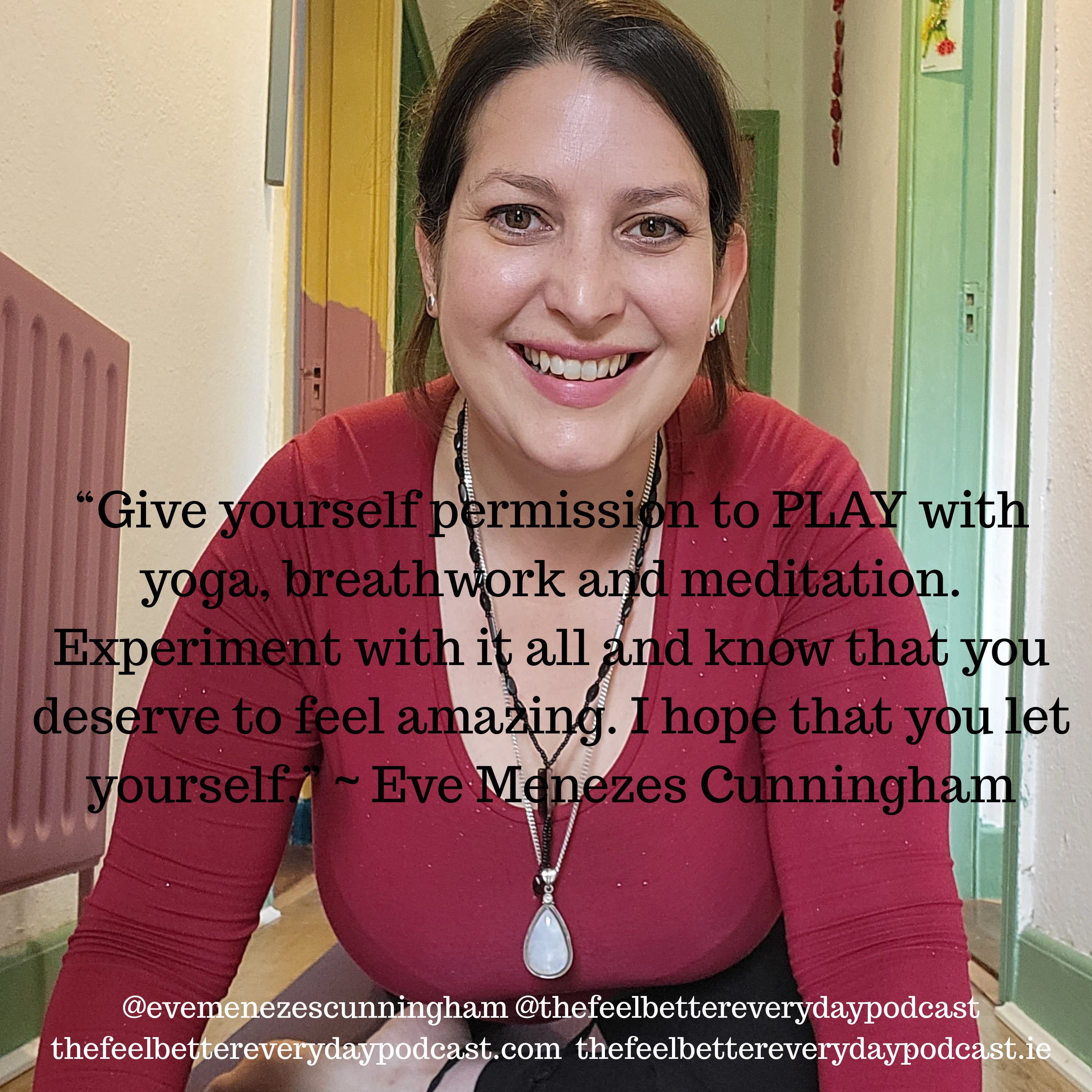
It might be that you don’t need to say a thing to anyone, but you give yourself permission, play with it, experiment it, but know that you deserve to feel amazing.
And I hope that you let yourself. So having listened to this episode, or having watched this episode, I’d love to know what action you’re going to take and what you’re going to experiment with. So either comment or let me know eve at selfcarecoaching.net
And the Sole to Soul Circle has moved from my Substack to my website, and it’s changed, it’s evolved so I’m encouraging you to sign up for my free newsletter, Míle Buíochas Mondays, and there’s a link in the show notes.
As well as the weekly polyvagal informed journal prompts, and me sharing some of the things I’m grateful for each week, and some of which may be of interest, either for you to try yourself, resources, or other things that are completely free, and just encouraging you to know what you know already. I’m going to be sharing more of the bonus content around each episode in those newsletters.
The Sole to Soul Circle is becoming a monthly online circle to complement the in-person Westport Lunar Circles. And email eve at selfcarecoaching.net if you have questions because the new pages aren’t yet ready. And hopefully they will be by the time you listen or watch this, but I’m moving into 2026 with more compassion for myself and not putting myself under as much pressure as I used to.
But it just feels like it makes more sense to simplify and the podcast is still available on Substack. But the Sole to Soul Circle has moved back to selfcarecoaching.net. And this episode, like all episodes, has been produced by me, your host Eve Menezes Cunningham. You can access lots of free resources and more about the book and all sorts of things at selfcarecoaching.net or thefeelbettereverydaypodcast.com.
And I hope you’ll join me in two weeks where we’re talking about Rejection Sensitivity Dysphoria, also known as RSD. [Next week, I have the delightful Dr Emma Bede as my guest so I switched the weeks around.]
And again, happy, happy new year. Thank you so much for listening. And if you haven’t already but would like to subscribe, that’s wonderful wherever you listen.
And feel free to leave a five star review or comment. And I read all of the comments and emails and I would love to hear what ADHD, autism and AuDHD traits you would most like me to cover in the coming months and year. Because I’m being more flexible than I was last year, but not as flexible as I’ve been in previous years.
But I very much want this to be beneficial for you. And yeah, really looking forward to moving through 2026 with you. Thanks again.
Thank you for listening or watching the Feel Better Every Day Podcast. This episode, like all of them was produced by me, your host Eve Menezes Cunningham. You can find full transcripts, links and more information in the show notes.
And also at selfcarecoaching.net as well as more information about the book, 365 Ways to Feel Better: Self-care Ideas for Embodied Wellbeing. And if you’re interested in those deeper dives, joining the Sole to Soul Circle, as well as lots of other free resources and information about other offerings. If this episode was helpful, please leave a five star review.
In a world in which so much is coming up for healing and so many people are feeling unsafe. I want to do whatever I can to help as many people as possible heal from trauma, helping create a world in which everyone is safe, welcome and loved physiologically, emotionally, spiritually and mentally able to thrive. So your subscribing or liking or sharing feedback and other support helps me help as many people of all genders with trauma histories and ADHD.
And you’re learning to take better care of yourself isn’t just good for you. It creates a ripple effect helping others heal too. So keep looking after yourself.
Do what feels good. Let yourself honour your nervous system. Let yourself honour your charge, your life force and míle buíochas, a thousand thank yous.